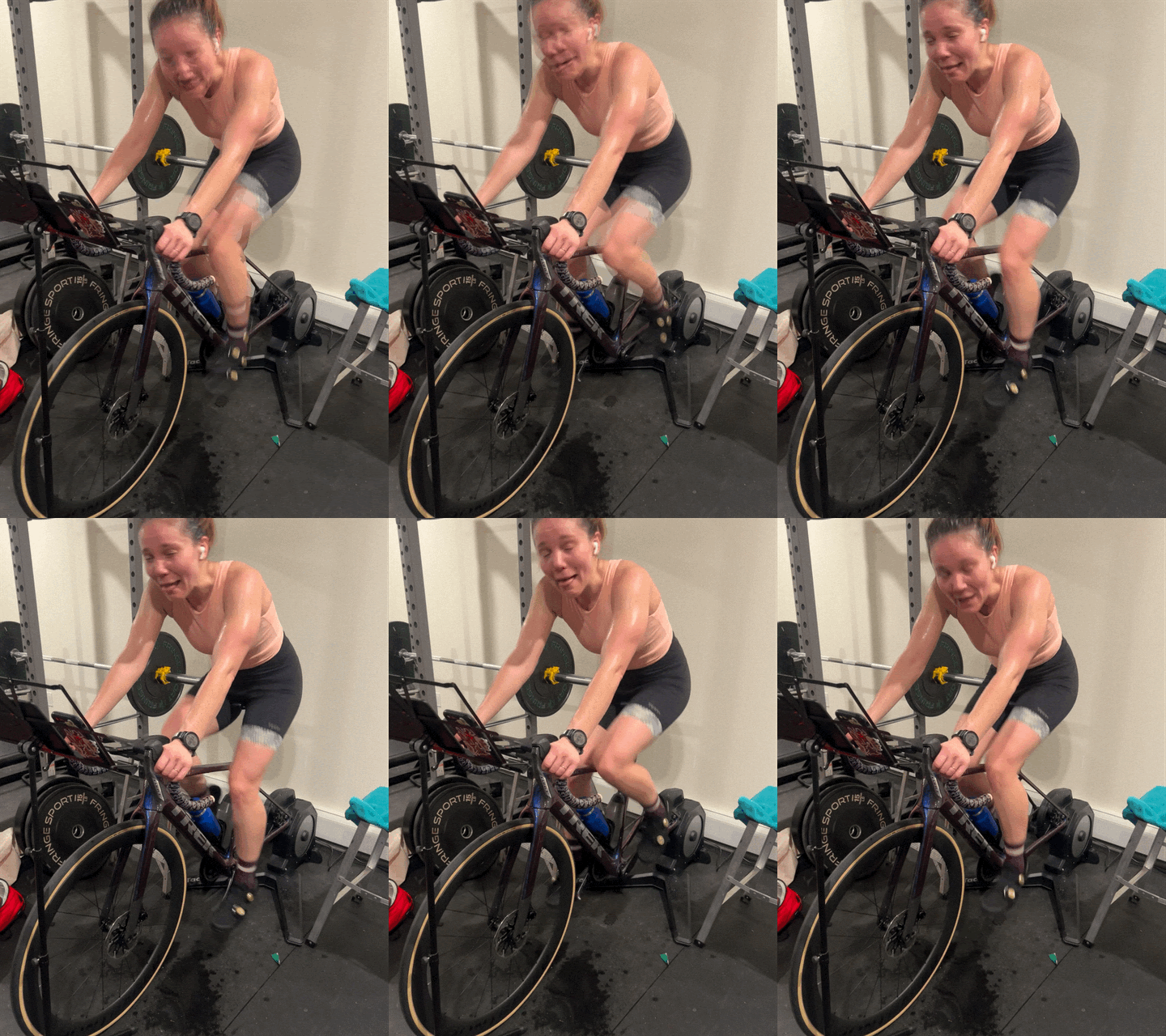




Here are some lightbulb moments I’ve had in the last three months💡and a bit of detail on how my training is structured right now.
Mondays, Wednesdays, and Fridays are my strength training days. I get to the gym for about 45 minutes before work and do the routine Mila at Summit Physical Therapy and Performance developed for me (thank goodness for Mila!💡). At a high level, each day’s big lift shifts from deadlifts to bench press to squats, with single-leg specifics and core work every day. I loooove deadlift days and haaaate bench press days.
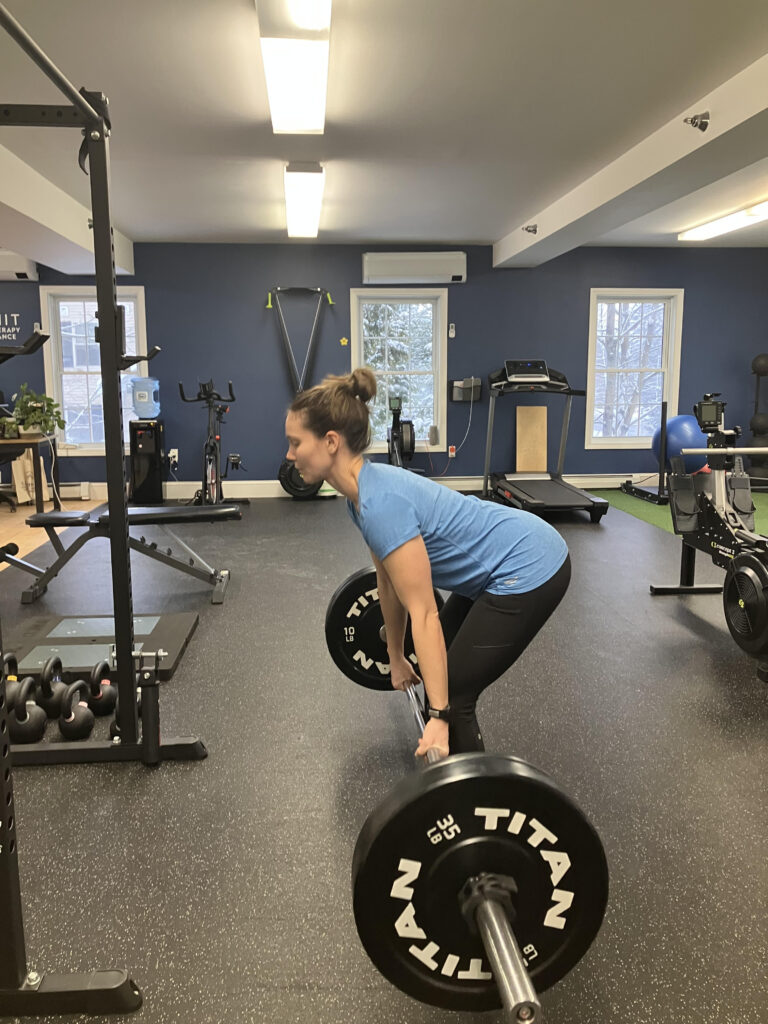
I’m pretty excited about the strength training aspect of my program, as I’ve historically struggled to weave it into my cardio-intensive extracurricular activities. Since starting the hypertrophy (new word for me! “the enlargement of a tissue from the increase in size of its cells”) phase of my strength training program, I’ve been able to deadlift 130% of my bodyweight, squat 100% of my bodyweight, and bench press 70% of my bodyweight. It feels good to get strong! Also, there are many documented benefits of strength training for bicyclists, and this program aligns with my goals.
Tuesdays, Thursdays, Saturdays, and Sundays are my cycling days, and in total, this amounts to about 5 hours on the bike. I’m doing high-intensity interval work programmed by TrainerRoad on Tuesdays, Thursdays, and Saturdays, and slow endurance days on Sundays. I was initially skeptical about the low-volume, high-intensity nature of this training program, as it’s a new approach for me. I wrote about this skepticism previously here.
Since writing that, I’ve completed three months of training, read “The Cyclist’s Training Bible” by Joe Friel, spoken with a cycling coach, and listened to various podcasts featuring cycling coaches. I’ve learned that a cyclist should strategically spread training time across heart rate zones to become race-ready, and here is an example of how to split this up:
Zone 1: <20%; Zone 2: 40-50%; Zone 3: 15-20%; Zone 4/5: 10%
Time spent in different zones achieves different fitness adaptations.💡 Spending the largest percentage of training time in what’s referred to as “Zone 2” will improve endurance performance because the body adapts to burning fat rather than sugar. Everybody has more fat than sugar on board as fuel, and having a body that prefers fat burning to sugar burning improves endurance performance. This idea has been key to my running training, and now I know my early skepticism about TrainerRoad wasn’t a problem with this function; it was a misunderstanding of how high-intensity interval training works.
I previously thought that high-intensity interval training involved spending 100% of the time in zones 3, 4, or 5, but that was inaccurate. They’re intervals, duh! 🤦♀️I looked at my Strava data after months of doing TrainerRoad’s program, and found that my Zone 2 average is almost exactly 40%! 💡The time I’m spending in higher zones also aligns with the high-level recommendation from a cycling coach and what I read in “The Cyclist’s Training Bible”.
If I am feeling slow or need recovery, I take a day off cycling during the week. This is such an intense plan, and I have a full-time job, so I know I need to give myself grace to skip a cycling day and rest. If my cycling goals suffer, that’s ok. 💡As Joe Friel puts it, “Realistically, there have to be limits to passion; otherwise we’d soon alienate everyone who wasn’t equally zealous and be reduced to slobbering zombies.”